
In this series, NUS News explores how NUS is accelerating sustainability research and education in response to climate change challenges, and harnessing the knowledge and creativity of our people to pave the way to a greener future for all.
Sustainability is a shared commitment that requires everyone to take personal responsibility for the planet. NUS students are encouraged to foster ground-up projects and partake in community initiatives to promote a sustainability mindset and sustainable practices across campus and among the next generation.
With hostelites spending much of their time on campus, making sustainable living both accessible and engaging is essential. From island-hopping excursions and food rescue operations to swapping fashion items, discover how students from various NUS hostels are learning and inspiring their peers to embrace a sustainable lifestyle!
Pioneer House
At the heart of Pioneer House's (PH) ethos lies a fundamental belief in the power of humanity. To this end, one of PH's core values is promoting frugality and sustainable living as part of a broader effort to remind residents that they can do their part to contribute meaningfully to the House and the wider community.
A Frugality and Sustainable Living Subcommittee comprising 17 like-minded students, led by undergraduate Prisha Ramesh Babu, oversees the planning of different initiatives to promote sustainable living among the PH community.
“Our efforts centre on introducing sustainable practices and habits that residents can adopt, while also encouraging a deeper connection with nature. By planning innovative and engaging events, we aim to transform sustainability into an inspiring and enriching aspect of community life!” said Prisha, a Year 2 Chemical Engineering undergraduate.
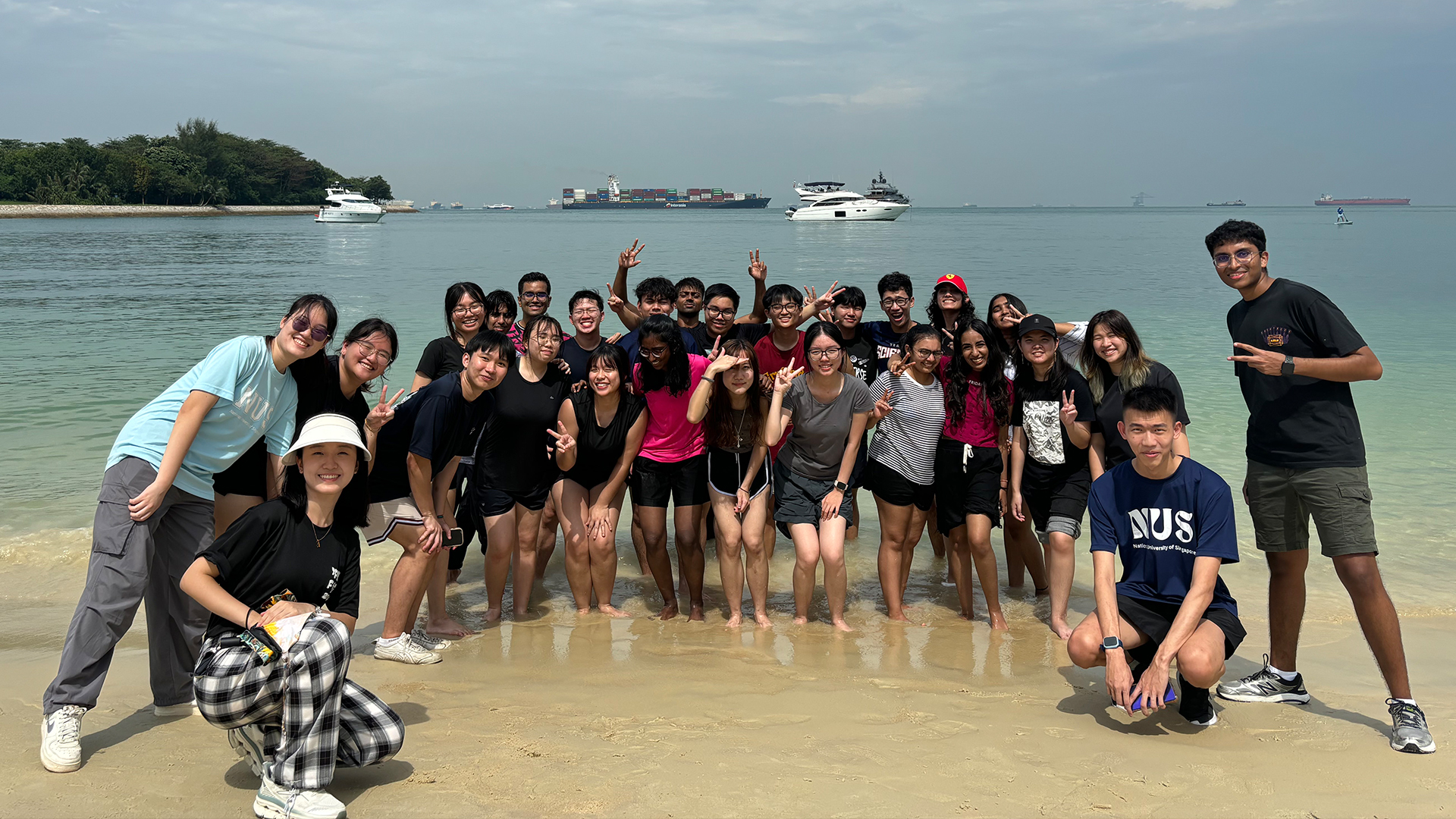
PH’s Frugality and Sustainable Living Subcommittee organises island-hopping excursions to St John’s and Lazarus Island where students get up close and personal with nature.
Through the island-hopping initiative, the subcommittee aims to take students on exploratory trips around Singapore's picturesque islands, such as St John's and Lazarus Island. During these visits, participants discover and appreciate each location’s unique ecosystems and cultural heritage.
Organised yearly, the popular island-hopping excursions are designed to minimise environmental impact. Students are encouraged to bring their own snacks and drinks, while enjoying outdoor activities such as swimming, hiking, and relaxing on the beaches – a budget-friendly way to escape from the hustle and bustle of the city!
Another interesting initiative organised by the subcommittee is Fashion Swap. Instead of purchasing new clothing items, PH residents are encouraged at the start of every academic year to donate their used clothing in exchange for curated pre-loved items from their peers. As nearly 7 per cent of the global landfill is made up of textile waste, the subcommittee hopes to promote mindful consumerism, encourage residents to adopt more sustainable living habits and be better stewards of the environment.
One of the main organisers of this initiative, Jonathan Ho, a Year 1 undergraduate from the Faculty of Science, recalled the challenge of managing some 50kg worth of clothing that changed hands at the last Fashion Swap held in October last year. “I am glad that the event was overall a success despite all the logistical struggles! I believe that many participants felt happy as they were able to exchange their clothes at no cost while also contributing to the reduction of clothing waste,” he shared.
Ridge View Residential College
As the residential college with sustainability as one of its themes, students residing at Ridge View Residential College (RVRC) are no strangers to issues related to sustainability. While it facilitates ground-up sustainability efforts by students, RVRC also adopts “The World is our Classroom” as a learning motto, such that even academic activities are carefully curated to provide a real-world experience to effectively inculcate a sustainability mindset in their residents.
One example of such a curated experience can be found in RVN2000 Engaging Communities in Sustainability, a course offered under the NUS General Education’s Communities and Engagement pillar. This course explores the role of communities in addressing challenges related to resource consumption and waste production through field trips with different community partners.
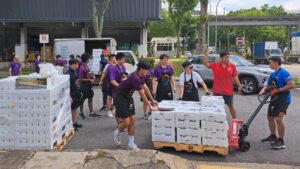
Students assisting volunteers of Fridge Restock Community SG in salvaging unsold produce from Pasir Panjang Wholesale Centre for delivery to various community distribution points and fridges across Singapore.
The course includes a field trip to Pasir Panjang Wholesale Centre, where students work alongside a ground-up initiative called Fridge Restock Community SG (FRC) to rescue “ugly” vegetables and fruits, which are then distributed to community fridges and community distribution points located in residential neighbourhoods.
Sharing her reflections after the field trip, Shanice Zhuang, a Year 2 student from the Faculty of Arts and Social Sciences said, “It was overwhelming to see the sheer amount of perfectly good produce that would have been disposed of. As we went through the process of collecting and distributing the produce, I kept wondering why these were considered as waste. They were still fresh and in good condition—too good to be thrown away.”
Students also engage with FRC’s founder, along with its volunteers and beneficiaries, gaining valuable insights into the challenges of community-led initiatives, the volunteers' motivations for participating in sustainability efforts, and the significant impact made by this initiative in addressing food waste.
Tembusu College
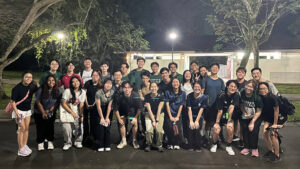
Thirty students from Tembusu College visited Pasir Ris Mangroves for a night walk organised by the Tembusu Wildlife Association (tWild) where they were able to spot a variety of nocturnal mangrove wildlife.
The five houses in Tembusu College are each named after endangered animal species, reflecting the College’s commitment to environmental stewardship. Additionally, the College has its very own student-led wildlife interest group - the Tembusu Wildlife Association (tWild).
tWild aims to inspire students to appreciate nature through education and hands-on exploration, while nurturing a sense of personal responsibility towards the planet and its biodiversity. The group organises a variety of activities on and off-campus to encourage Tembusians to deepen their understanding and appreciation of the rich biodiversity in Singapore.
These on-campus activities included a movie-trivia night featuring a wildlife-related documentary; and Wildlife Wednesday, a recurring initiative that shares fun facts about local species and offers practical tips on how individuals can address conservation challenges.
During recess and reading weeks, students venture out of the campus and go on guided wildlife walks at different nature reserves and parks across Singapore. These walks allow Tembusians to learn more about local wildlife and foster a greater sense of appreciation for nature and its inhabitants.
Sharing about their future plans, Zayn Tong, Year 2 Life Sciences undergraduate said: “One exciting event we have planned for this semester is Conservation Month. Throughout this month, we will centre our activities around a unifying theme, featuring events like nature walks and talks by experts in wildlife and conservation. These speakers will share their work and offer insights into how students can make a tangible impact.
“Our goal is to provide Tembusians with more opportunities to learn about conservation and sustainability; and empower them to play an active role in these efforts through interactive walks, informative talks and engaging exhibits.”
This is the second in a two-part series featuring sustainability initiatives at the various hostels in NUS. Read the first part here.
Contributor(s)
This story was first published on NUS News